List: $15.00
| Sale: $10.50
Club: $7.50
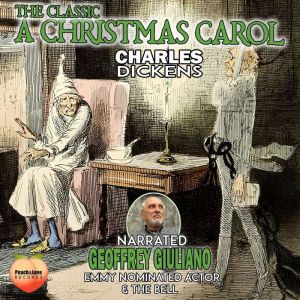
The Classic A Christmas Carol
Author: Charles Dickens
Narrator: Geoffrey Giuliano, The Bell
Unabridged: 3 hr 35 min
Format: Digital Audiobook Download
Publisher: Author's Republic
Published: 12/10/2023
Categories: Fiction, Classic, Seasonal Fiction
Synopsis
"A Christmas Carol" follows the transformation of Ebenezer Scrooge, a miserly and cold-hearted old man, throughout one magical Christmas Eve. The narrative begins with Scrooge, a wealthy but stingy moneylender, dismissing the Christmas season with contempt and refusing to give to charity. He dislikes the idea of Christmas joy and generosity, considering them a waste of time and money. On Christmas Eve, as Scrooge is visited by the ghost of his former business partner, Jacob Marley. Marley, burdened with heavy chains as punishment for his greed and selfishness in life, warns Scrooge that he will suffer a similar fate unless he changes his ways.
Marley tells Scrooge that he will be visited by three spirits that night. The first the Ghost of Christmas Past, takes Scrooge on a journey through his childhood and early adulthood. Scrooge witnesses scenes from his past, including his lonely and neglected childhood, lost love, and moments when he chose money over relationships. The second spirit, the Ghost of Christmas Present, shows Scrooge scenes of people joyfully celebrating Christmas in the present. Scrooge is particularly moved by the Cratchit family, especially Bob Cratchit and his son Tiny Tim, who is ill. Despite their poverty, the Cratchits find happiness in each other and embody the true spirit of Christmas. The third spirit, the Ghost of Christmas Yet to Come (or the Ghost of Christmas Future), shows Scrooge a bleak future if he continues on his current path. Scrooge sees his lonely death and the lack of mourning from those around him. He also witnesses Tiny Tim's death, which is a result of the family's inability to afford proper medical care.
Frightened and remorseful, Scrooge pleads for a chance to change. He promises to embrace the Christmas spirit and become a better person. Awakening on Christmas morning, Scrooge is overjoyed to discover that he has been given a second chance
Marley tells Scrooge that he will be visited by three spirits that night. The first the Ghost of Christmas Past, takes Scrooge on a journey through his childhood and early adulthood. Scrooge witnesses scenes from his past, including his lonely and neglected childhood, lost love, and moments when he chose money over relationships. The second spirit, the Ghost of Christmas Present, shows Scrooge scenes of people joyfully celebrating Christmas in the present. Scrooge is particularly moved by the Cratchit family, especially Bob Cratchit and his son Tiny Tim, who is ill. Despite their poverty, the Cratchits find happiness in each other and embody the true spirit of Christmas. The third spirit, the Ghost of Christmas Yet to Come (or the Ghost of Christmas Future), shows Scrooge a bleak future if he continues on his current path. Scrooge sees his lonely death and the lack of mourning from those around him. He also witnesses Tiny Tim's death, which is a result of the family's inability to afford proper medical care.
Frightened and remorseful, Scrooge pleads for a chance to change. He promises to embrace the Christmas spirit and become a better person. Awakening on Christmas morning, Scrooge is overjoyed to discover that he has been given a second chance