About Daniel Defoe
Daniel Defoe (1660–1731) is an English novelist, pamphleteer, and journalist, whose most famous work is Robinson Crusoe. Along with Samuel Richardson, Defoe is considered the founder of the English novel.
Defoe studied at Charles Morton's Academy in London, then delved into politics and trade, for which he traveled extensively throughout Europe. In the early 1680s, Defoe was a commission merchant in Cornhill but went bankrupt in 1691. In 1684 he married Mary Tuffley, with whom he had two sons and five daughters.
In 1702 Defoe wrote his famous pamphlet The Shortest Way With Dissenters, in which he mimicked the extreme attitudes of High Anglican Tories and pretended to argue for the extermination of all Dissenters. Defoe was arrested and pilloried for it.
When the Tories fell from power Defoe continued to carry out intelligence work for the Whig government. In his own days, Defoe was regarded as an unscrupulous, diabolical journalist.
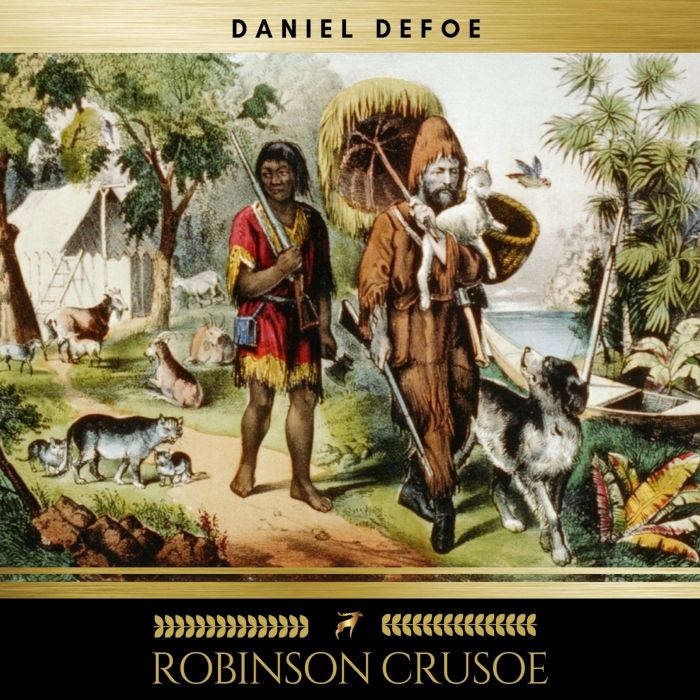
Defoe was one of the first to write stories about believable characters in realistic situations using simple prose. He achieved literary immortality when in 1719 he published Robinson Crusoe, which was based partly on the memoirs of voyagers and castaways, such as Alexander Selkirk. During his remaining years, Defoe concentrated on books rather than pamphlets. Among his works are Moll Flanders, A Journal of the Plague Year, and Captain Jack. His last great work of fiction, Roxana, appeared in 1724. By the 1720s Defoe had ceased to be politically controversial in his writings, and he produced several historical works, a guide book, and The Great Law of Subordination Considered, an examination of the treatment of servants.
Phenomenally industrious, Defoe produced in his last years works involving the supernatural: The Political History of the Devil and An Essay on the History and Reality of Apparitions. He died on April 26, 1731, at his lodgings in Ropemaker's Alley, Moorfields.