List: $22.99
| Sale: $16.09
Club: $11.49
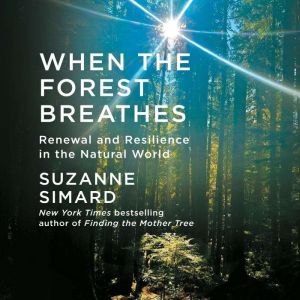
When the Forest Breathes
Renewal and Resilience in the Natural World
Author: Suzanne Simard
Narrator: Suzanne Simard
Unabridged: 8 hr 51 min
Format: Digital Audiobook Download
Publisher: Random House Audio
Published: 03/31/2026
Categories: Nonfiction, Biography & Autobiography, Science, Environmental Science
Synopsis
NEW YORK TIMES BESTSELLER • The author of Finding the Mother Tree offers a powerful vision for saving our forests based on nature’s deep-rooted cycles of renewal.
"A masterclass on the inner workings of forests. . . . This is science as an act of love for the world.” —Zoë Schlanger, author of The Light Eaters
Early one spring morning, I went back to the forest. I wanted to learn what the mother trees could teach me about survival and adaptability, about living and dying.
Raised in a family of loggers committed to sensible forest stewardship, trailblazing ecologist Suzanne Simard has watched as timber companies leave forests at higher risk for wildfires, water crises, and plant and animal extinction. But her research has the potential to chart a new course. The forest, she reveals, is a symphony of finely honed cycles of regeneration—from mushrooms breaking down logs to dying elder trees passing their genetic knowledge to younger ones—that hold the key to protecting our forests. Working closely with local Indigenous communities, whose models of responsible forestry have been largely dismissed, Simard examines how human interventions—particularly destruction of the overstory's mother trees—endanger new growth and longevity. If we can honor the tools that trees have honed for sharing intergenerational wisdom, she argues, we can protect these sacred places for many years to come.
As she considers how older living things facilitate the conditions for new growth to flourish, Simard faces parallel rhythms of loss and regeneration in her own life, watching her two daughters grow into adults and savoring her final days with her ailing mother. Animated by wonder for our forests and the intricate practices of caretaking that have long sustained them, When the Forest Breathes is a vital reminder of all the natural world has to teach us about adaptability, resilience, and community.
"A masterclass on the inner workings of forests. . . . This is science as an act of love for the world.” —Zoë Schlanger, author of The Light Eaters
Early one spring morning, I went back to the forest. I wanted to learn what the mother trees could teach me about survival and adaptability, about living and dying.
Raised in a family of loggers committed to sensible forest stewardship, trailblazing ecologist Suzanne Simard has watched as timber companies leave forests at higher risk for wildfires, water crises, and plant and animal extinction. But her research has the potential to chart a new course. The forest, she reveals, is a symphony of finely honed cycles of regeneration—from mushrooms breaking down logs to dying elder trees passing their genetic knowledge to younger ones—that hold the key to protecting our forests. Working closely with local Indigenous communities, whose models of responsible forestry have been largely dismissed, Simard examines how human interventions—particularly destruction of the overstory's mother trees—endanger new growth and longevity. If we can honor the tools that trees have honed for sharing intergenerational wisdom, she argues, we can protect these sacred places for many years to come.
As she considers how older living things facilitate the conditions for new growth to flourish, Simard faces parallel rhythms of loss and regeneration in her own life, watching her two daughters grow into adults and savoring her final days with her ailing mother. Animated by wonder for our forests and the intricate practices of caretaking that have long sustained them, When the Forest Breathes is a vital reminder of all the natural world has to teach us about adaptability, resilience, and community.

