List: $19.99
| Sale: $13.99
Club: $9.99
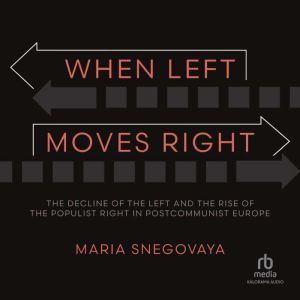
When Left Moves Right
The Decline of the Left and the Rise of the Populist Right in Postcommunist Europe
Author: Maria Snegovaya
Narrator: Teri Schnaubelt
Unabridged: 8 hr 36 min
Format: Digital Audiobook Download
Publisher: Kalorama
Published: 05/21/2024
Categories: Nonfiction, Political Science, Political Ideologies
Synopsis
Over the past two decades, postcommunist countries have witnessed a sudden shift in the electoral fortunes of their political parties: previously successful center-left parties suffered dramatic electoral defeats and disappeared from the political scene, while right-wing populist parties soared in popularity and came to power. This dynamic echoed similar processes in Western Europe and raises a question: Were these dynamics in any way connected? When Right Moves Left argues that they were. And that the root of the connection between them lies in the pro-market rebranding of the ex-communist left—the key explanatory variable. This book asserts that, though the left's pro-market shift initially led to electoral rewards, it had a less straightforward impact on left-wing parties' electoral fortunes in the long run.
The book draws upon different levels of analysis: cross-country observational data, case studies, and individual-level experimental surveys. It argues that scholars should incorporate the economic policy dimension when explaining the demise of the left and the rise of the populist right in the region. It also examines important parallels between the dynamics of Western and postcommunist countries by arguing that the idiosyncrasy of Eastern European politics has been overstated in scholarly literature.
The book draws upon different levels of analysis: cross-country observational data, case studies, and individual-level experimental surveys. It argues that scholars should incorporate the economic policy dimension when explaining the demise of the left and the rise of the populist right in the region. It also examines important parallels between the dynamics of Western and postcommunist countries by arguing that the idiosyncrasy of Eastern European politics has been overstated in scholarly literature.
