10 Rating(s)
List: $31.99
| Sale: $22.40
Club: $15.99
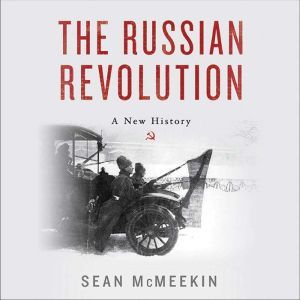
The Russian Revolution
A New History
Author: Sean McMeekin
Narrator: Pete Larkin
Unabridged: 15 hr 3 min
Format: Digital Audiobook Download
Publisher: Basic Books
Published: 07/03/2017
Categories: Nonfiction, History, Russian History, Modern History
Includes:
Bonus Material

Synopsis
From an award-winning scholar, this definitive history reveals the tensions and transformations of the Russian Revolution.
“McMeekin writes muscular history. His Russian Revolution grips the reader.” —Niall Ferguson
In The Russian Revolution, acclaimed historian Sean McMeekin traces the events which ended Romanov rule, ushered the Bolskeviks into power, and introduced communism to the world. Between 1917 and 1922, Russia underwent a complete and irreversible transformation. Taking advantage of the collapse of the Tsarist regime in the middle of World War I, the Bolsheviks staged a hostile takeover of the Russian Imperial Army, promoting mutinies and mass desertions of men in order to fulfill Lenin’s program of turning the “imperialist war” into civil war. By the time the Bolsheviks had snuffed out the last resistance five years later, over twenty million people had died, and the Russian economy had collapsed so completely that communism had to be temporarily abandoned.
The first comprehensive history of these momentous events in over two decades, The Russian Revolution combines cutting-edge scholarship and a fast-paced narrative to shed new light on one of the most significant turning points of the twentieth century.
“McMeekin writes muscular history. His Russian Revolution grips the reader.” —Niall Ferguson
In The Russian Revolution, acclaimed historian Sean McMeekin traces the events which ended Romanov rule, ushered the Bolskeviks into power, and introduced communism to the world. Between 1917 and 1922, Russia underwent a complete and irreversible transformation. Taking advantage of the collapse of the Tsarist regime in the middle of World War I, the Bolsheviks staged a hostile takeover of the Russian Imperial Army, promoting mutinies and mass desertions of men in order to fulfill Lenin’s program of turning the “imperialist war” into civil war. By the time the Bolsheviks had snuffed out the last resistance five years later, over twenty million people had died, and the Russian economy had collapsed so completely that communism had to be temporarily abandoned.
The first comprehensive history of these momentous events in over two decades, The Russian Revolution combines cutting-edge scholarship and a fast-paced narrative to shed new light on one of the most significant turning points of the twentieth century.


