List: $7.99
| Sale: $5.60
Club: $3.99
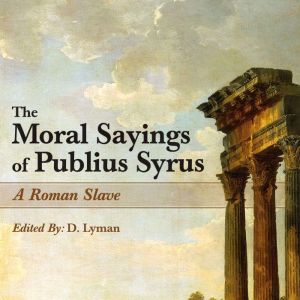
The Moral Sayings of Publius Syrus
A Roman Slave
Author: Publius Syrus
Narrator: Larry Peterson
Unabridged: 2 hr 20 min
Format: Digital Audiobook Download
Publisher: Mockingbird Press
Published: 10/24/2022
Categories: Nonfiction, History, Ancient History
Synopsis
The Moral Sayings of Publius Syrus, A Roman Slave is a collection of proverbs and aphorisms pulled from the many mimes and plays of Publius Syrus. Enslaved by the Romans in his youth, this witty man went on to conquer the Roman stage. These maxims, believed to have been collected in the 1st century AD, are all that remain of the great playwright’s work.
Born in Syria in the 1st century BC, Publius Syrus was enslaved and brought to Rome by an army officer after the Romans conquered his native country. It was in Rome that he was given the name of Syrus, for his place of origin. He was then around 12 years old.
This soldier had a patron who was delighted with the boy and requested that the soldier give Syrus to him. The soldier complied. Syrus’ new master found the boy witty and bright and was often entertained with his commentary. With such promise, the master provided Syrus with an education and later freed him. Syrus was immensely grateful and remained friends with his former master for the rest of his life. He took the surname Publius, which was probably the surname of his master.
Newly free, Syrus traveled to Italy and began composing mimes—comical farces often used to “represent the failings and eccentricities of the higher classes, and the vulgar language and solecisms of the lower.” This combination of humor and moralism was widely popular among the Romans of the time, and Syrus earned great acclaim as a poet and actor.
None of the great master’s plays have survived the ensuing centuries. But fortunately, many of his pithy maxims were collected from his plays, probably in the 1st century AD, and gathered into a single volume. This collection was translated from the Latin and first published in 1856.
Included among the 1,087 proverbs are some that appear to be the foundation—or at least an early version—of sayings we still use today.
While additional context regarding these quotes would be useful, they still have value on their own. These 1,087 proverbs
Born in Syria in the 1st century BC, Publius Syrus was enslaved and brought to Rome by an army officer after the Romans conquered his native country. It was in Rome that he was given the name of Syrus, for his place of origin. He was then around 12 years old.
This soldier had a patron who was delighted with the boy and requested that the soldier give Syrus to him. The soldier complied. Syrus’ new master found the boy witty and bright and was often entertained with his commentary. With such promise, the master provided Syrus with an education and later freed him. Syrus was immensely grateful and remained friends with his former master for the rest of his life. He took the surname Publius, which was probably the surname of his master.
Newly free, Syrus traveled to Italy and began composing mimes—comical farces often used to “represent the failings and eccentricities of the higher classes, and the vulgar language and solecisms of the lower.” This combination of humor and moralism was widely popular among the Romans of the time, and Syrus earned great acclaim as a poet and actor.
None of the great master’s plays have survived the ensuing centuries. But fortunately, many of his pithy maxims were collected from his plays, probably in the 1st century AD, and gathered into a single volume. This collection was translated from the Latin and first published in 1856.
Included among the 1,087 proverbs are some that appear to be the foundation—or at least an early version—of sayings we still use today.
While additional context regarding these quotes would be useful, they still have value on their own. These 1,087 proverbs

