List: $20.00
| Sale: $14.00
Club: $10.00
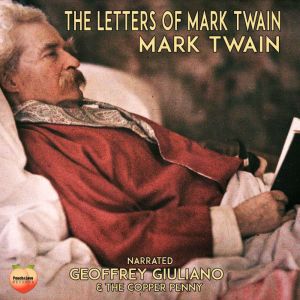
The Letters of Mark Twain
Author: Mark Twain
Narrator: Geoffrey Giuliano, The Copper Penny
Unabridged: 32 hr 29 min
Format: Digital Audiobook Download
Publisher: Author's Republic
Published: 12/05/2022
Categories: Nonfiction, Literary Collections
Synopsis
These letters were arranged in two volumes by Albert Bigelow Paine, Samuel L. Clemens's literary executor, as a supplement to Mark Twain, A Biography, which Paine wrote. They are, for the most part, every letter written by Clemens known to exist at the time of their publication in 1917. They begin with a fragment of a letter from teenaged Sam Clemens to his sister, Pamela, and conclude with a letter to his attorney two weeks before his death.
These letters give us some degree of insight into the evolution of Twain's style of speech and prose over the period of his lifetime; they are a small window into the psyche that created the various characters of his stories.
But they also reveal the tragedies of his life: the lack of success in his business ventures, and the passing of his family. And as I read each one in this collection, I can almost detect the faint odor of one of his “devilish” cigars wafting across the room.
Samuel Langhorne Clemens, known by his pen name Mark Twain, was an American writer, humorist, entrepreneur, publisher, and lecturer. He was praised as the "greatest humorist the United States has produced", and William Faulkner called him "the father of American literature".
These letters give us some degree of insight into the evolution of Twain's style of speech and prose over the period of his lifetime; they are a small window into the psyche that created the various characters of his stories.
But they also reveal the tragedies of his life: the lack of success in his business ventures, and the passing of his family. And as I read each one in this collection, I can almost detect the faint odor of one of his “devilish” cigars wafting across the room.
Samuel Langhorne Clemens, known by his pen name Mark Twain, was an American writer, humorist, entrepreneur, publisher, and lecturer. He was praised as the "greatest humorist the United States has produced", and William Faulkner called him "the father of American literature".