List: $6.99
| Sale: $4.90
Club: $3.49
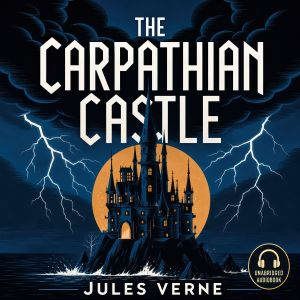
The Carpathian Castle
Author: Jules Verne
Narrator: AI Voice Charles Owen
Unabridged: 5 hr 53 min
Format: Digital Audiobook Download
Publisher: Independently Published
Published: 08/01/2026
Categories: Fiction, Gothic, Horror, World Literature
Synopsis
This audiobook is narrated by an AI Voice. A castle in the Carpathian Mountains, supposedly abandoned for years, shows signs of occupation. Lights flicker in its windows. Smoke rises from its chimneys. Strange sounds echo through the valleys. The villagers of the region know what this means: the dead have returned.
Franz de Télek, a young Italian nobleman, has his own reasons for investigating. Years ago, he loved La Stilla, a celebrated opera singer who died tragically young. Rumors suggest she's been seen in the castle—or something wearing her appearance. When Franz ventures into the fortress, he discovers something more disturbing than ghosts: Baron Rodolphe de Gortz has deployed the latest technological innovations—phonographs, projection equipment, elaborate mechanical systems—to resurrect the dead. Or rather, to create an impossibly convincing illusion of resurrection.
Set in Transylvania five years before Bram Stoker's Dracula, the novel initially seems to be Gothic horror—terrified peasants, mysterious castle, supernatural occurrences.
The Baron hasn't used technology to advance knowledge or improve lives. He's deployed it to refuse death's finality, to remain frozen in grief, to create an increasingly elaborate fantasy that La Stilla still exists. The machines don't ease his obsession—they enable it, allowing him to sustain delusion indefinitely.
This isn't the Verne of Twenty Thousand Leagues Under the Sea or Around the World in Eighty Days. This is late-career Verne, profoundly skeptical about progress, using Gothic conventions to explore technology's capacity not to liberate but to deceive, to enable new forms of obsession impossible without mechanical intervention.
Franz de Télek, a young Italian nobleman, has his own reasons for investigating. Years ago, he loved La Stilla, a celebrated opera singer who died tragically young. Rumors suggest she's been seen in the castle—or something wearing her appearance. When Franz ventures into the fortress, he discovers something more disturbing than ghosts: Baron Rodolphe de Gortz has deployed the latest technological innovations—phonographs, projection equipment, elaborate mechanical systems—to resurrect the dead. Or rather, to create an impossibly convincing illusion of resurrection.
Set in Transylvania five years before Bram Stoker's Dracula, the novel initially seems to be Gothic horror—terrified peasants, mysterious castle, supernatural occurrences.
The Baron hasn't used technology to advance knowledge or improve lives. He's deployed it to refuse death's finality, to remain frozen in grief, to create an increasingly elaborate fantasy that La Stilla still exists. The machines don't ease his obsession—they enable it, allowing him to sustain delusion indefinitely.
This isn't the Verne of Twenty Thousand Leagues Under the Sea or Around the World in Eighty Days. This is late-career Verne, profoundly skeptical about progress, using Gothic conventions to explore technology's capacity not to liberate but to deceive, to enable new forms of obsession impossible without mechanical intervention.