Sylvias Marriage, Upton Sinclair
List: $4.99 | Sale: $3.50
Club: $2.49

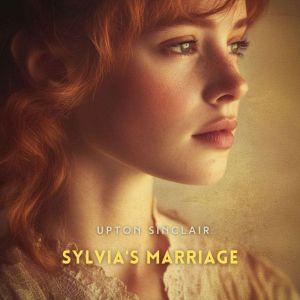
Sylvia's Marriage
A Novel

Author: Upton Sinclair

Narrator: Eloise Fairfax

Unabridged: 6 hr 50 min

Format: Digital Audiobook Download

Published: 04/29/2025


Synopsis

"Sylvia's Marriage: A Novel" by Upton Sinclair is a compelling exploration of love, independence, and societal expectations. The story follows Sylvia, a spirited young woman navigating the complexities of marriage and personal freedom in early 20th-century America. As she confronts the constraints of traditional gender roles and economic dependence, Sylvia embarks on a journey of self-discovery and resilience. Sinclair delves into themes of class struggle, emotional growth, and the tension between individual desires and societal norms. Through Sylvia’s experiences, the novel critiques the institution of marriage and advocates for equality and autonomy. A blend of social commentary and heartfelt drama, it reflects Sinclair’s commitment to highlighting women’s struggles and the pursuit of empowerment.

About Upton Sinclair

Upton Sinclair was born in Baltimore, Oregon, on September 20, 1878, and was moved to New York City in 1888. Although his own family were extremely poor, he spent periods of time living with his wealthy grandparents. An intelligent boy, he did well at school, and at age fourteen, he entered New York City College. Soon afterwards, he had his first story published in a national magazine. Over the next few years Sinclair funded his college education by writing stories for newspapers and magazines. By age seventeen, Sinclair was earning enough money to enable him to move into his own apartment while supplying his parents with a regular income.

Sinclair's first novel, Springtime and Harvest, was published in 1901. He followed this with The Journal of Arthur Stirling, Prince Hagen, Manassas, and A Captain of Industry, but they all sold poorly.

In the early 1900s Sinclair became an active socialist, eventually joining with Jack London, Clarence Darrow, and Florence Kelley to form the Intercollegiate Socialist Society. In 1904, the editor of the socialist journal Appeal to Reason commissioned Sinclair to write a novel about immigrant workers in the Chicago meat-packing houses. The owner of the journal provided Sinclair with a $500 advance, and after seven weeks' research, Sinclair wrote The Jungle. Serialized in 1905, the book helped to increase the journal's circulation to 175,000. However, Sinclair had his novel rejected by six publishers. Sinclair decided to publish the book himself, and after advertising his intentions in Appeal to Reason, he got orders for 972 copies. When he told Doubleday of these orders, it decided to publish the book. The Jungle was an immediate success, eventually selling over 150,000 copies all over the world.

Sinclair's next few novels—The Overman, The Metropolis, The Moneychangers, Love's Pilgrimage, and Sylvia—were commercially unsuccessful.

In 1914, Sinclair moved to Croton-on-Hudson, a small town close to New York City where there was a substantial community of radicals. He pleased his socialist friends with his anthology of social protest, The Cry for Justice. Sinclair continued to write political novels, including King Coal, which is based on an industrial dispute, and Boston. He also wrote books about religion (The Profits of Religion), newspapers (The Brass Check), and education (The Goose-Step and The Goslings).

In 1940, World's End launched Sinclair's eleven-volume series on American government. His novel Dragon's Teeth, on the rise of Nazism, won him the Pulitzer Prize. By the time Sinclair died in November 1968, he had published more than ninety books.

Reviews

Goodreads review by Fae on February 22, 2016

A good quick read, and as most Upton Sinclair, ahead of its time. The story of naïveté, marriage, enlightenment, and the drama that comes with knowledge of good and evil. A story of inequality of the sexes.......more

Goodreads review by Dr.J.G. on October 10, 2019

The story is told by Mary Abbott, about Sylvia and about herself. Sylvia is from Society, while Mary has lived hard working farmer's life. "I was to Sylvia a new and miraculous thing, a self-made woman. I must have been the first "common" person she had ever known intimately. She had seen us afar off......more

Goodreads review by Dr.J.G. on October 10, 2019

The story is told by Mary Abbott, about Sylvia and about herself. Sylvia is from Society, while Mary has lived hard working farmer's life. "I was to Sylvia a new and miraculous thing, a self-made woman. I must have been the first "common" person she had ever known intimately. She had seen us afar off......more

Goodreads review by Dr.J.G. on October 10, 2019

The story is told by Mary Abbott, about Sylvia and about herself. Sylvia is from Society, while Mary has lived hard working farmer's life. "I was to Sylvia a new and miraculous thing, a self-made woman. I must have been the first "common" person she had ever known intimately. She had seen us afar off......more

Goodreads review by Dr.J.G. on October 10, 2019

The story is told by Mary Abbott, about Sylvia and about herself. Sylvia is from Society, while Mary has lived hard working farmer's life. "I was to Sylvia a new and miraculous thing, a self-made woman. I must have been the first "common" person she had ever known intimately. She had seen us afar off......more