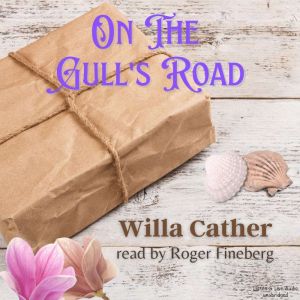
On The Gulls Road, Willa Cather
List: $7.95 | Sale: $5.57
Club: $3.97

On The Gull's Road

Author: Willa Cather

Narrator: Roger Fineberg

Unabridged: 47 min

Format: Digital Audiobook Download

Published: 03/29/2023

Categories: Fiction, Short Stories


Synopsis

"On the Gulls' Road" is a touching short story by Willa Cather, first published in McClure's in December 1908. A fellow painter visits the narrator, and is mesmerised by his painting of Alexandra Ebbling, a married woman, whom the narrator met on a ship from Genoa to New York City. On the ship, he and Mrs. Ebbling enjoyed many conversations about life, love, and personal experiences. The courtship goes on for the entire trip and grows stronger each day. The man is smitten by Mrs. Ebbling and cannot wait until the next time they meet. The man paints a picture of Mrs. Ebbling while they talk and enjoy the sunshine and the sea so he can always remember the woman. They tell each other things about their hopes and dreams. All the while Mrs. Ebbling knows that nothing can come of the affair. She is married and close to death. The man has high hopes for her to run away with him but she has to tell him that it can never happen. Mrs. Ebbling gives the man a gift that he is not to open until she tells him to. In the following winter, he is informed that she had died. Inside the gift she had given him, there is a letter from her thanking him for all the memories he gave her of a love that almost happened, along with a lock of her golden hair, a withered magnolia flower, and two pink sea shells. In the end, theirs was a love that stood the test of time, separation, and even death.

About Willa Cather

One of the great American writers of the twentieth century, Willa Cather (1873-1947) enjoyed distinguished careers as a journalist, editor, and fiction writer. She is most often thought of as a chronicler of the pioneer American West. Cather's fiction is characterized by a strong sense of place, the subtle presentation of human relationships, an often unconventional narrative structure, and a style of clarity and beauty.

Willa was born on December 7, 1873, in Back Creek Valley, Virginia. In 1883, the Cather family moved to Nebraska, where her father opened a loan and insurance office. Willa attributed the family's lack of financial success to her father, whom she claimed placed intellectual and spiritual matters over those of the business. Her mother was a vain woman, mostly concerned with fashion and trying to turn Willa into "a lady," despite the fact that Willa defied the norms for girls, cutting her hair short and wearing trousers.

After graduating from the University of Nebraska in 1895, Willa was offered a position editing Home Monthly in Pittsburgh, Pennsylvania. While editing the magazine, she wrote short stories to fill its pages, including a collection called "The Troll Garden" in 1905, which caught the attention of S. S. McClure. The following year, Willa moved to New York to join the editorial staff of McClure's Magazine. She eventually became managing editor and saved the magazine from financial disaster. After the publication of "Alexander's Bridge" in 1912, she left McClure's and devoted herself to creative writing. A year later, Willa published her bestseller O Pioneers!-a celebration of the strength and courage of the frontier settlers. Other well-known novels with this theme are My Ántonia and the Pulitzer Prize-winning One of Ours.

Willa's prolific success lead to a period of despair, but after she recovered, she wrote some of her greatest novels, including The Professor's House, My Mortal Enemy, and Death Comes for the Archbishop. She maintained an active writing career, publishing novels and short stories for many years until her death on April 24, 1947.


Reviews

Goodreads review by Candi

Everything about this short story by Willa Cather is simply breathtaking. I was consumed by the sea, soaking in the beautiful images of the lilac haze over Vesuvius, the tranquil, purple sea off the coast of Sardinia, and the swelling, bright blue waters of the Atlantic. The sea itself seemed to ech......more