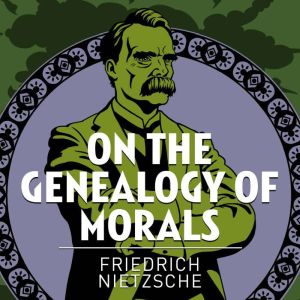
On the Genealogy of Morals, Friedrich Nietzsche
List: $12.99 | Sale: $9.10
Club: $6.49

On the Genealogy of Morals

Author: Friedrich Nietzsche

Series: The Classic Friedrich Nietzsche Collection

Narrator: Richard Trinder

Unabridged: 6 hr 57 min

Format: Digital Audiobook Download

Published: 06/01/2025


Synopsis

The sight of suffering does one good, the infliction of suffering does one more good - this is a hard maxim, but none the less a fundamental maxim, old, powerful, and "human, all-too-human". In this daring and insightful work, Nietzsche lays bare the hypocrisies at the foundations of our ideas of morality. Considering ideas of good and evil, guilt and conscience, and law and violence along the way, On the Genealogy of Morals takes the reader on a journey through the history of value systems in three masterful essays. His insights are sometimes uncomfortable, sometimes provocative, but always demonstrate the workings of an exceptional mind. Together, this collection of essays makes up one of the most powerful works of modern philosophy that seeks to do nothing less than unravel the mysteries of human nature.

About Friedrich Nietzsche

Friedrich Nietzsche (1844-1900) was a German philosopher and philologist whose best-known works include Thus Spoke Zarathustra; Ecce Homo; Human, All Too Human; and Beyond Good and Evil. Much of his work is characterized by radical questioning of the value and objectivity of truth and criticism of traditional ideals of morality. Nietzsche's writings were significant influences on the existentialist, nihilist, and postmodernist schools of thought, as well as on the work of such later writers as Herman Hesse, Albert Camus, Sigmund Freud, and Jean-Paul Sartre.


Reviews

Goodreads review by Rowland on June 03, 2010

On The Genealogy of Morals is made up of three essays, all of which question and critique the value of our moral judgments based on a genealogical method whereby Nietzsche examines the origins and meanings of our different moral concepts. The first essay, "'Good and Evil,' 'Good and Bad'" contras......more

Goodreads review by P.E. on September 10, 2021

'Man will wish Nothingness rather than not wish at all.' This is the second work by Friedrich Nietzsche I've read/that has been read to me after Beyond Good and Evil. Since this German philosopher is said to have had a considerable influence on Albert Camus, I decided to make a general survey of his......more

Goodreads review by Roy on June 02, 2016

For all his brilliance, Nietzsche was not one for exposition or systematic investigation. He writes in impassioned bursts rather than extended thoughts—a style in keeping with his abhorrence for all things stale, academic, and ‘English’. This quality is evident right from the preface, which is divid......more