List: $22.99
| Sale: $16.09
Club: $11.49
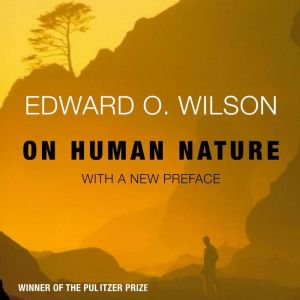
On Human Nature
Author: Edward O. Wilson
Narrator: Joe Barrett
Unabridged: 7 hr 57 min
Format: Digital Audiobook Download
Publisher: University Press Audiobooks
Published: 07/15/2010
Categories: Nonfiction, Psychology, Evolutionary Psychology
Synopsis
No one who cares about the human future can afford to ignore Edward O. Wilson's audiobook. On Human Nature, Revised Edition, begins a new phase in the most important intellectual controversy of this generation: Is human behavior controlled by the species' biological heritage? Does this heritage limit human destiny?With characteristic pungency and simplicity of style, the author of Sociobiology challenges old prejudices and current misconceptions about the nature-nurture debate. He shows how...evolution has left its traces on the most distinctively human activities, how patterns of generosity, self-sacrifice, and worship, as well as sexuality and aggression, reveal their deep roots in the life histories of primate bands that hunted big game in the last Ice Age. His goal is nothing less than the completion of the Darwinian revolution by bringing biological thought into the center of the social sciences and the humanities.Wilson presents a philosophy that cuts across the usual categories of conservative, liberal, or radical thought. In systematically applying the modern theory of natural selection to human society, he arrives at conclusions far removed from the social Darwinist legacy of the last century. Sociobiological theory, he shows, is compatible with a broadly humane and egalitarian outlook. Human diversity is to be treasured, not merely tolerated, he argues. Discrimination against ethnic groups, homosexuals, and women is based on a complete misunderstanding of biological fact. But biological facts can never take the place of ethical choices. Once we understand our human nature, we must choose how "human" in the fullest, biological sense, we wish to remain. We cannot make this choice with the aid of external guides or absolute ethical principles because our very concept of right and wrong is wholly rooted in our own biological past. This paradox is fundamental to the evolution of consciousness in any species; there is no formula for escaping it. To understand its essence is to grasp the full predicament of the human condition.

