List: $40.99
| Sale: $28.70
Club: $20.49
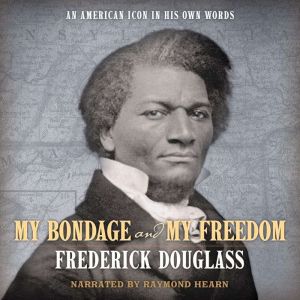
My Bondage and My Freedom
An American Icon In His Own Words
Author: Frederick Douglass
Narrator: Raymond Hearn
Unabridged: 15 hr 22 min
Format: Digital Audiobook Download
Publisher: Maple Spring Publishing
Published: 02/04/2025
Synopsis
"I had reached the point, at which I was not afraid to die. This spirit made me a freeman in fact, while I remained a slave in form."
An Autobiographical Classic of American Literature
Frederick Douglass (1818–1895) was a former slave who became a social reformer, orator, writer, and statesman. One of the most prominent figures in the anti-slavery movement, Douglass emerged as a national leader of the abolitionist movement, speaking and writing widely on behalf of the cause.
In this classic work, Douglass gives a firsthand account of his life from birth through his time spent in slavery, his escape to freedom in 1838, and his transition from bondage to liberty.
This audiobook, read by Raymond Hearn, an African American voice actor and storyteller who speaks with the authority, warmth, and trustworthiness to turn listeners into believers, takes you on Douglass’ personal journey of refection and his critique of the institution of slavery – its dehumanizing effects on slaves and slaveholders, the power of education, self-emancipation, and the struggle for justice and equality for all.
Douglass describes his involvement in the abolitionist movement and the steps that led him to the international spotlight as the foremost speaker for American blacks, both freed and slave and of the struggle for civil rights and racial equity.
This important historical document is an inspiration for all who seek freedom and justice. Douglass is an example of what can be accomplished through courage and hard work. His eloquence and inspiring words continue to move and motivate people today.
An Autobiographical Classic of American Literature
Frederick Douglass (1818–1895) was a former slave who became a social reformer, orator, writer, and statesman. One of the most prominent figures in the anti-slavery movement, Douglass emerged as a national leader of the abolitionist movement, speaking and writing widely on behalf of the cause.
In this classic work, Douglass gives a firsthand account of his life from birth through his time spent in slavery, his escape to freedom in 1838, and his transition from bondage to liberty.
This audiobook, read by Raymond Hearn, an African American voice actor and storyteller who speaks with the authority, warmth, and trustworthiness to turn listeners into believers, takes you on Douglass’ personal journey of refection and his critique of the institution of slavery – its dehumanizing effects on slaves and slaveholders, the power of education, self-emancipation, and the struggle for justice and equality for all.
Douglass describes his involvement in the abolitionist movement and the steps that led him to the international spotlight as the foremost speaker for American blacks, both freed and slave and of the struggle for civil rights and racial equity.
This important historical document is an inspiration for all who seek freedom and justice. Douglass is an example of what can be accomplished through courage and hard work. His eloquence and inspiring words continue to move and motivate people today.

