List: $18.00
| Sale: $12.60
Club: $9.00
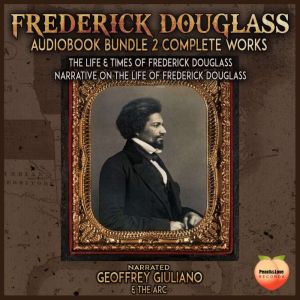
Frederick Douglass 2 Complete Works
Life & Times Of Frederick Douglass Narrative On The Life Of Frederick Douglass
Author: Frederick Douglass
Narrator: Geoffrey Giuliano, The Arc
Unabridged: 27 hr 6 min
Format: Digital Audiobook Download
Publisher: Icon Audio Arts
Published: 05/17/2023
Categories: Nonfiction, Biography & Autobiography
Synopsis
Frederick Douglass, born into slavery in Maryland in 1818, became one of the most prominent abolitionists, orators, and writers in American history. His life story is a testament to the resilience of the human spirit and the pursuit of freedom. Douglass escaped slavery in his early twenties and dedicated his life to the abolitionist cause. Through his powerful speeches, autobiographical writings, and activism, he fought for the rights of African Americans and became a leading voice in the fight against slavery.
Douglass's legacy is rooted in his tireless efforts to expose the atrocities of slavery and advocate for equal rights. His first autobiography, "Narrative of the Life of Frederick Douglass, an American Slave," published in 1845, vividly depicted the brutalities of slavery and its dehumanizing effects. The book became a bestseller and an influential tool in the abolitionist movement. Douglass went on to write two additional autobiographies, "My Bondage and My Freedom" (1855) and "Life and Times of Frederick Douglass" (1881), chronicling his life, experiences, and evolving viewpoints. His writings not only shed light on the horrors of slavery but also provided a platform for him to advocate for education, suffrage, and social justice.
In addition to his writings, Douglass's oratory skills captivated audiences and galvanized support for the abolitionist cause. He was a powerful and persuasive speaker, delivering speeches that stirred emotions, challenged societal norms, and demanded equality for all. His most famous speech, "What to the Slave Is the Fourth of July?" delivered in 1852, remains a poignant critique of the hypocrisy of celebrating freedom while denying it to enslaved individuals.
Douglass's legacy is rooted in his tireless efforts to expose the atrocities of slavery and advocate for equal rights. His first autobiography, "Narrative of the Life of Frederick Douglass, an American Slave," published in 1845, vividly depicted the brutalities of slavery and its dehumanizing effects. The book became a bestseller and an influential tool in the abolitionist movement. Douglass went on to write two additional autobiographies, "My Bondage and My Freedom" (1855) and "Life and Times of Frederick Douglass" (1881), chronicling his life, experiences, and evolving viewpoints. His writings not only shed light on the horrors of slavery but also provided a platform for him to advocate for education, suffrage, and social justice.
In addition to his writings, Douglass's oratory skills captivated audiences and galvanized support for the abolitionist cause. He was a powerful and persuasive speaker, delivering speeches that stirred emotions, challenged societal norms, and demanded equality for all. His most famous speech, "What to the Slave Is the Fourth of July?" delivered in 1852, remains a poignant critique of the hypocrisy of celebrating freedom while denying it to enslaved individuals.