List: $30.99
| Sale: $21.70
Club: $15.49
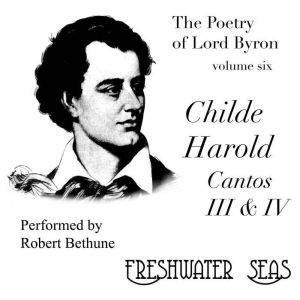
Childe Harold's Pilgrimage
Cantos III & IV
Author: Lord Byron
Series: Poetry of Lord Byron
Narrator: Robert Bethune
Unabridged: 2 hr 49 min
Format: Digital Audiobook Download
Publisher: Freshwater Seas
Published: 09/13/2010
Synopsis
With Childe Harold's Pilgrimage, cantos III and IV, Byron comes to the high point of his work and to clear and definite mastery of his art as a poet. Though he himself doubts his powers - he says his visions no longer swim so palpably before his eyes as once they did - his visions are far more palpable to us, expressed as they are with the full depth of his romantic and passionate feelings. He continues the device of the journey of the fictional Harold, but Harold is almost a ghost; the thin disguise and facade that separates him from the poet essentially vanishes. Even the concept of his pilgrimage fades; Byron is not concerned nearly as much with places and people in this canto as he is with art and ideas. The place that means the most to him is no longer a human habitation, but the world of Nature, in which the inmost depths of his heart is reflected.
He writes, "There is a pleasure in the pathless woods, There is a rapture on the lonely shore, There is society, where none intrudes, By the deep sea, and music in its roar: I love not man the less, but Nature more, From these our interviews, in which I steal From all I may be, or have been before, To mingle with the Universe, and feel What I can ne'er express, yet cannot all conceal." Byron spends this last portion of his pilgrimage in that special place, that realm of the spirit and the soul, where what matters is the highest achievements of art. Out of that place is his poem made.
Public Domain (P)2010 Robert Bethune A Freshwater Seas production.


